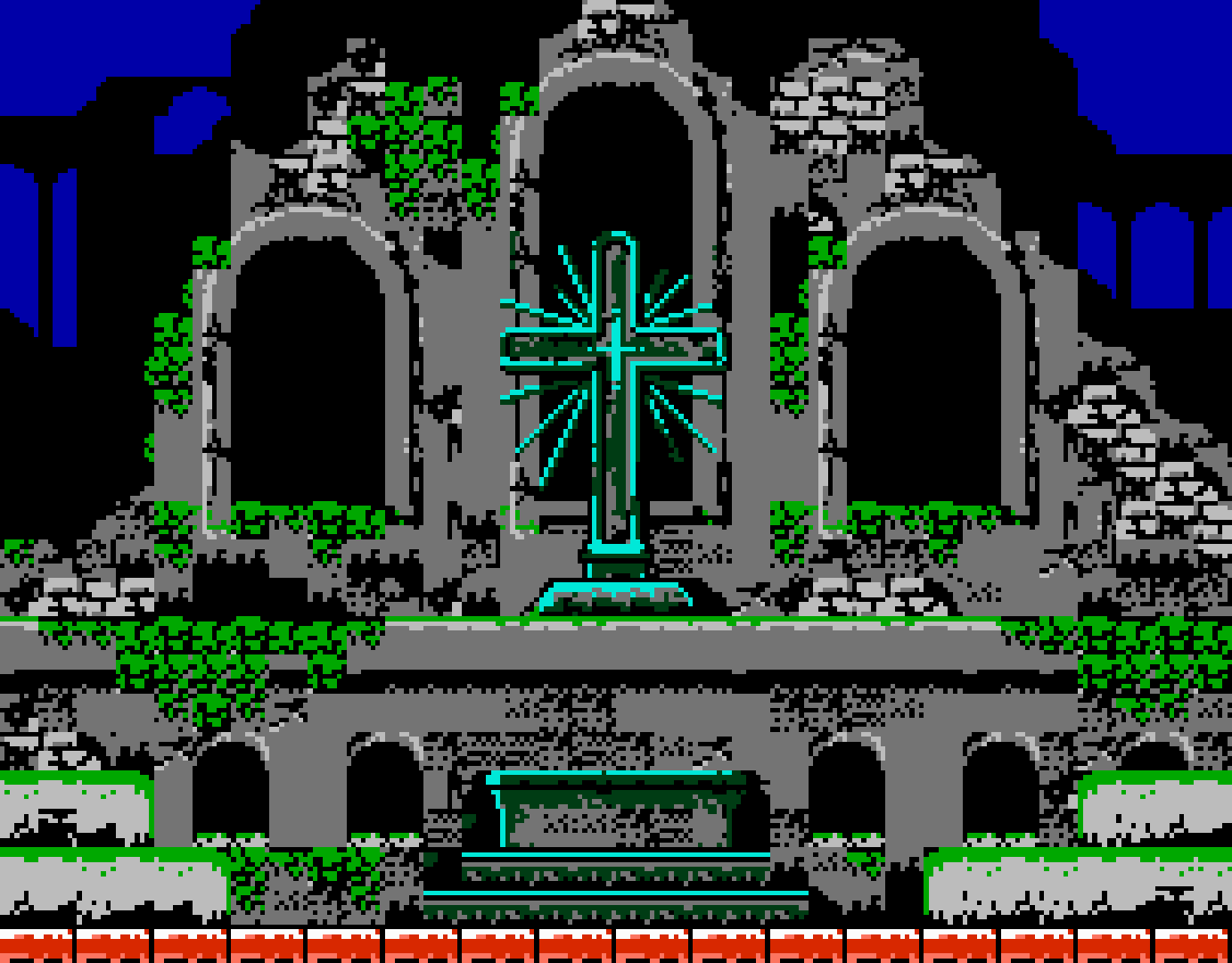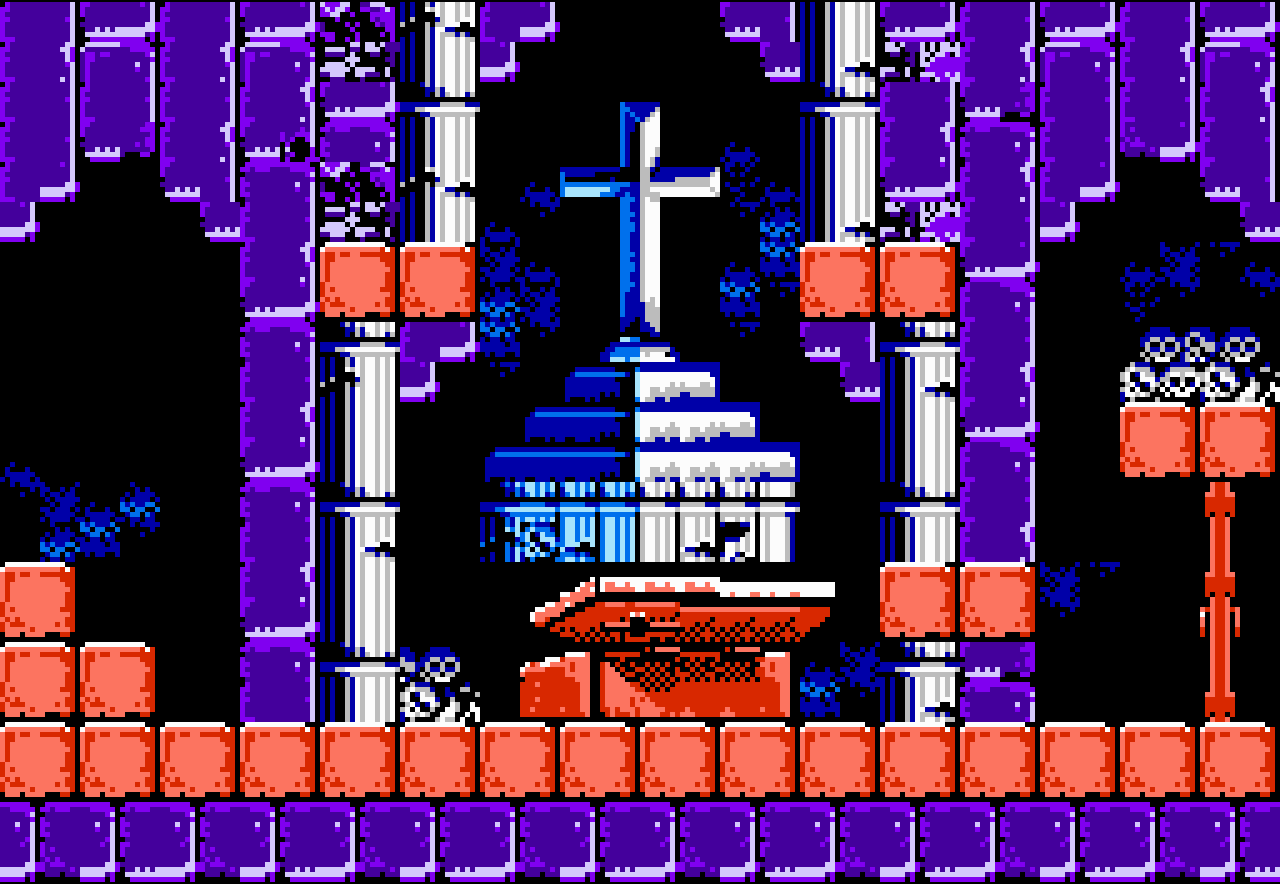

A ruined memorial at the start of the game (USA/EU)





| Castlevania III: Dracula's Curse | |
|---|---|
| Game Information |
| Country of Origin | Japan |
| Original Title | 悪魔城伝説 (Akumajō Densetsu) | Translated Title | Legend of the Demon Castle |
| Development Information | |
| Developer | Konami |
| Director | Hitoshi Akamatsu |
| Designer | I. Urata |
| Artist | Noriyasu Togakushi Takeshi Fujimoto I. Urata |
| Release Information | |
| Platforms |
|
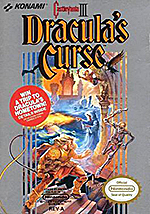
GAME INFO: Castlevania III: Dracula's Curse is the third entry in the Castlevania series for the Nintendo Entertainment System, taking place before the events of Castlevania in 1476 CE. Trevor Belmont, Simon's medieval ancestor, traverses the areas surrounding Dracula's castle in an attempt to slay Dracula in the Belmont family tradition that occurs whenever Dracula's body reforms roughly once every century. While maintaining the linear, side-scrolling platforming of the games that precede it, the game also includes several different paths the player can take to reach Dracula's castle, as well as adding three new playable characters, the rogue Grant Danasty, the sorceress Sypha Belnades, and Dracula's good-hearted son Alucard. All of these elements allow for varied gameplay, and give players incentive to replay the game.
SETTING: The game takes place in the same semi-historical setting of Translyvania, albeit just over two hundred years prior to the events of the first Castlevania game. Despite the long chronological gap between the two games, Castlevania III: Dracula's Curse very closely resembles its predecessors visually, sharing similar character and enemy designs, stage elements, and backgrounds. That being said, Trevor explores a wider range of environments compared to previous games, including aqueducts, a haunted pirate ship, and a subterannean city.
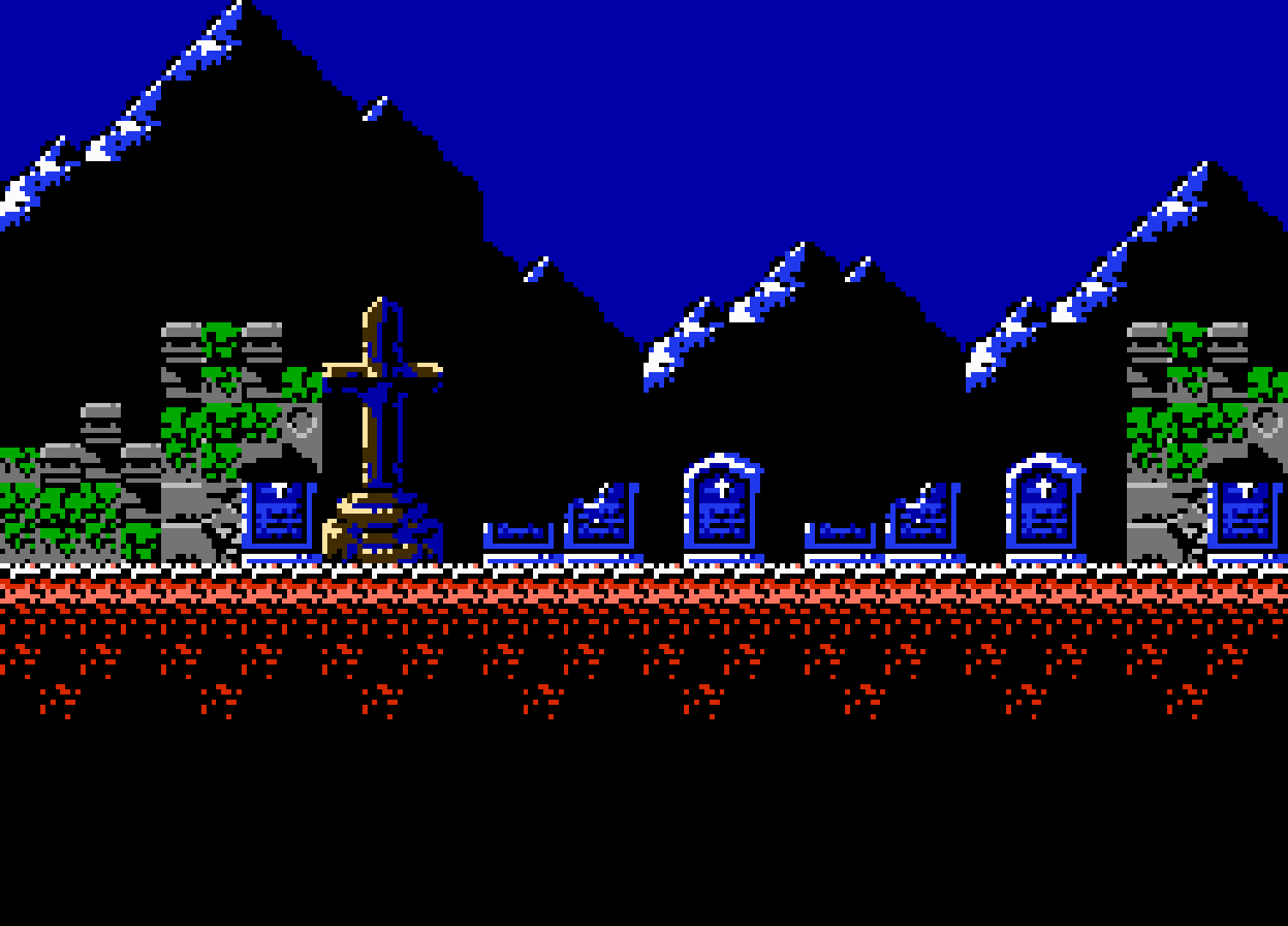
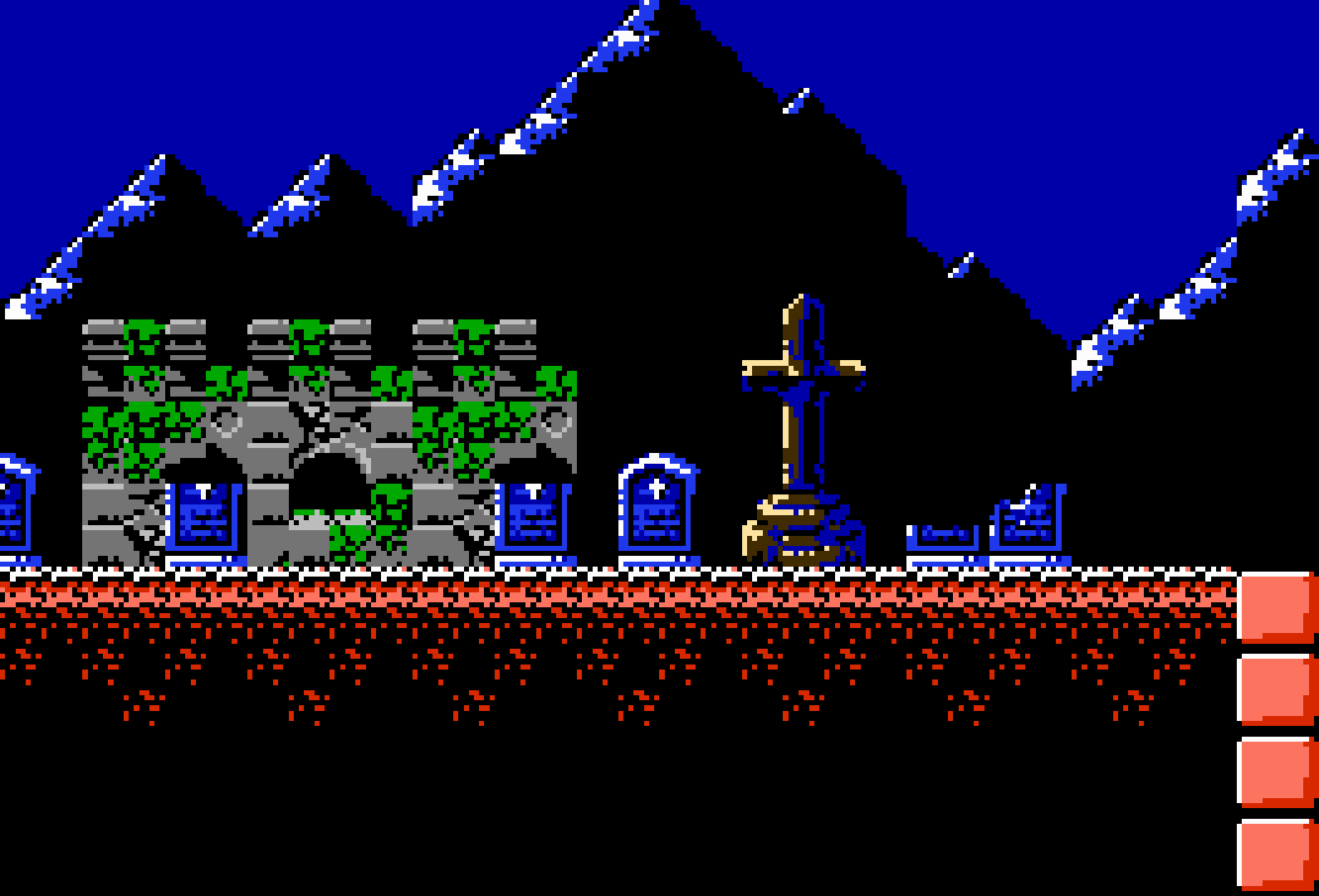
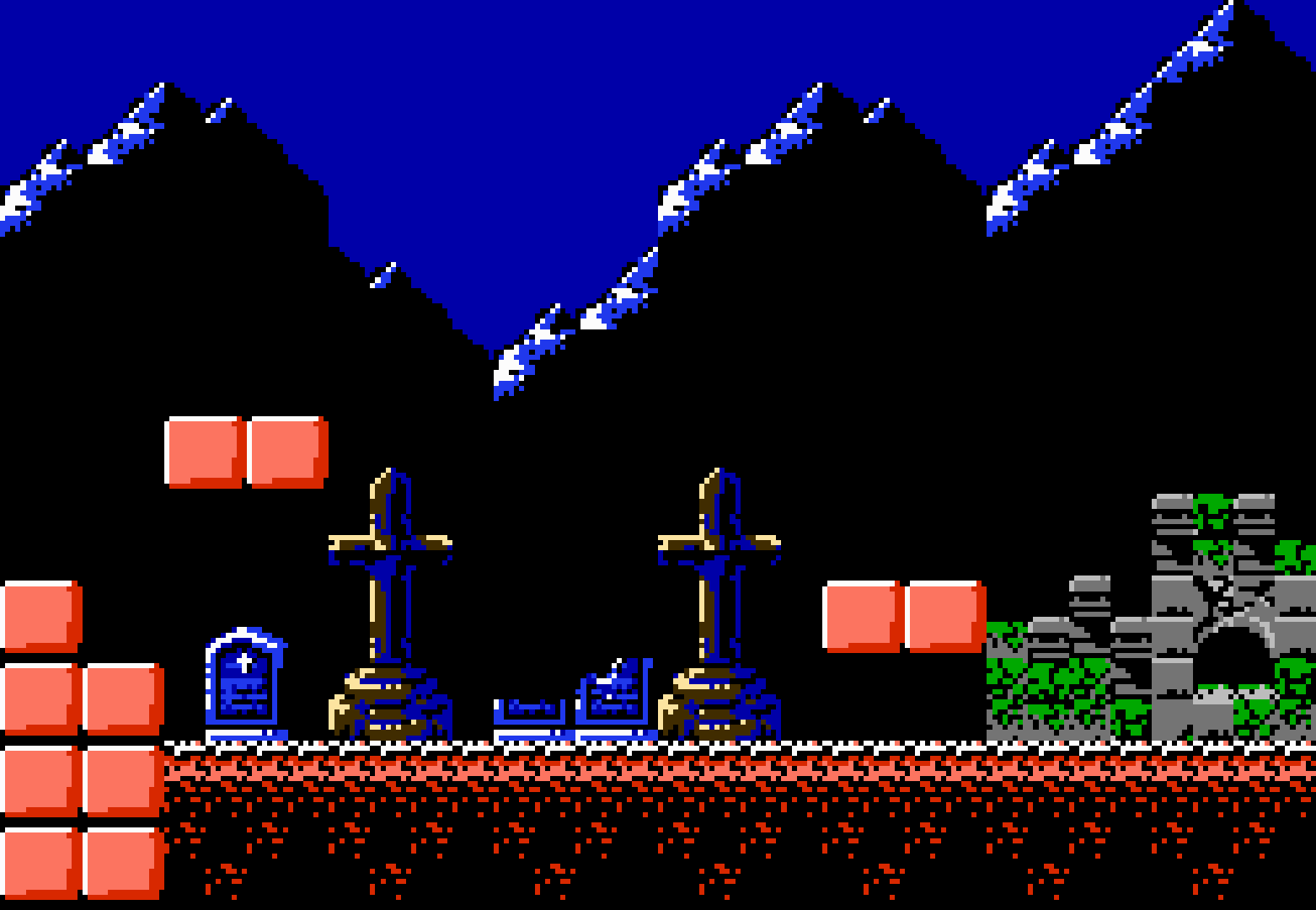
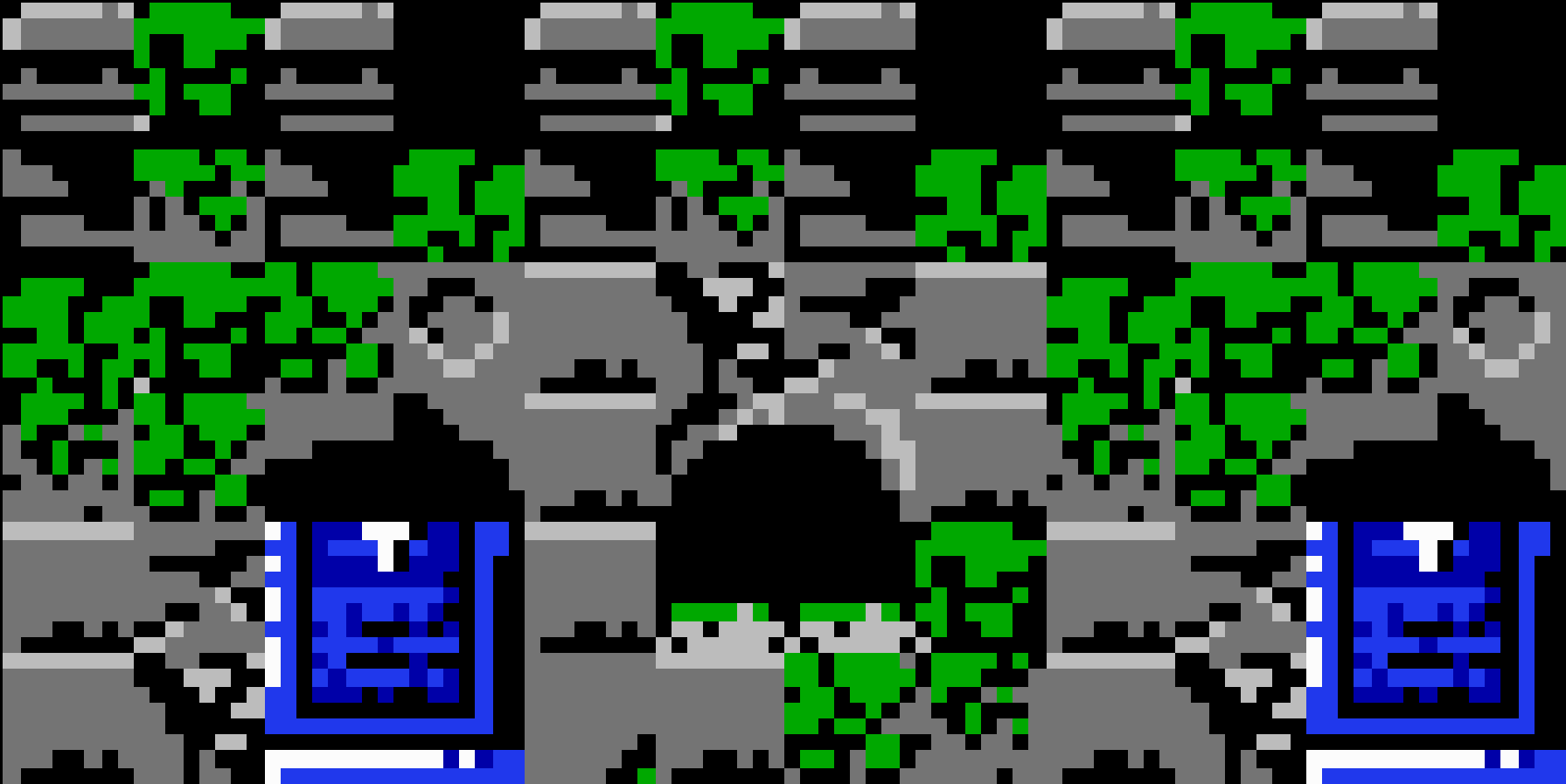
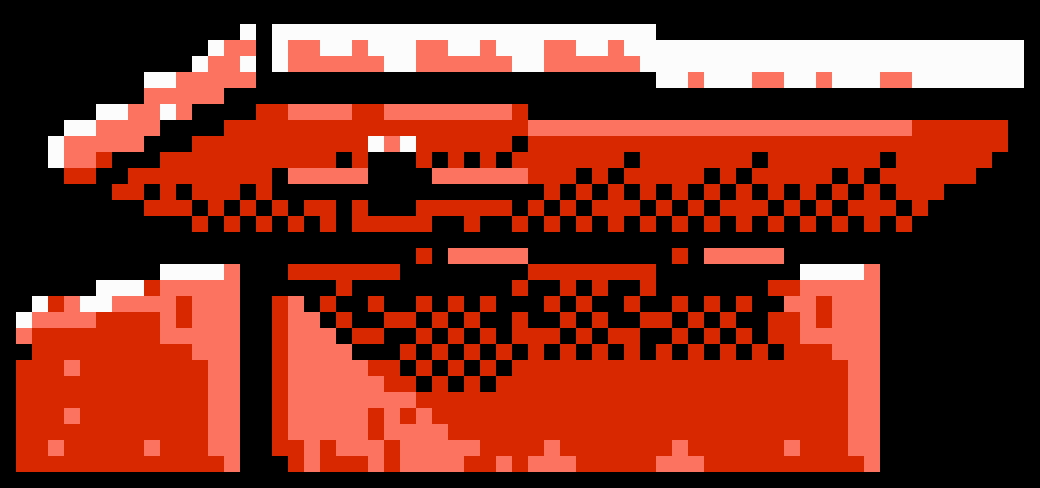
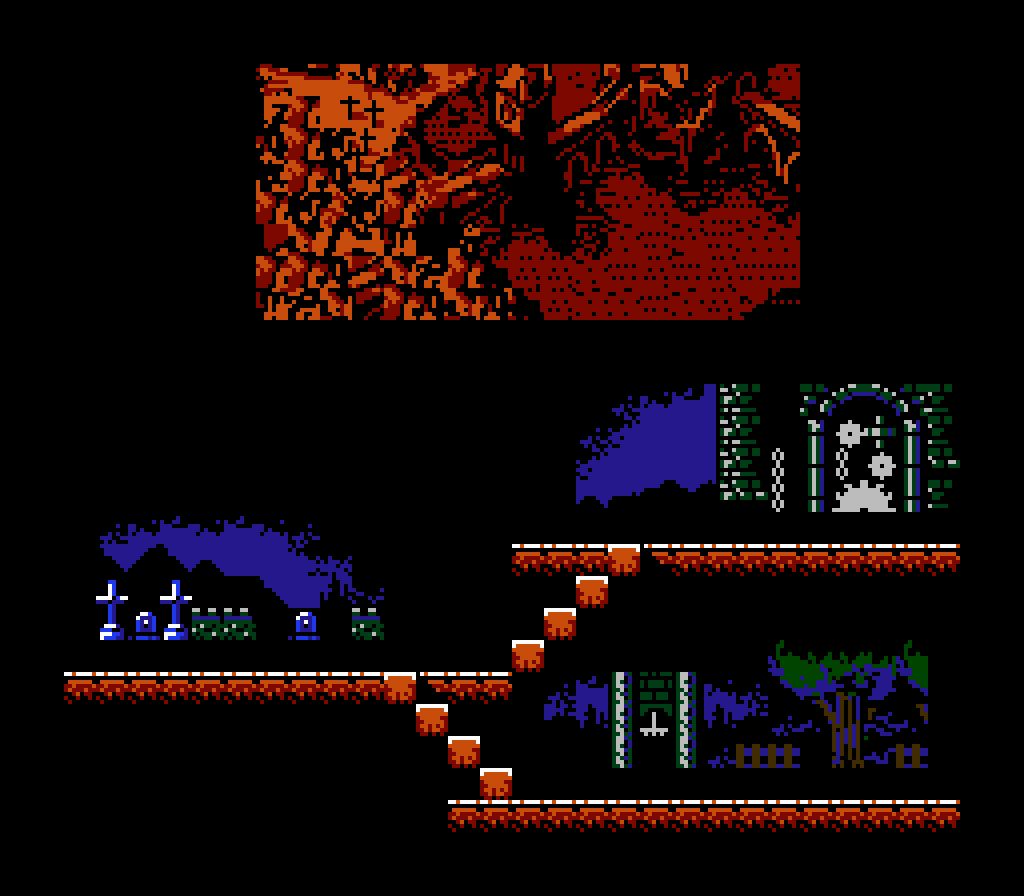
FUNERARY IMAGERY: At the very beginning of the game, Trevor kneels before an enormous cross and stone sarcophagus in a ruined abbey. Trevor leaves the abbey and through a ruined city, ascending a cathedral and descending into a churchyard at the very outskirts of the area. Upright headstones populate the churchyard, some of which are crumbling. There are also several crucifix monuments and what appears to be mausoleums in the background, leading to a sparse boneyard where a giant, bull-headed skeleton re-assembles to fight Trevor. In stage four, players traverse subterannean tunnels to reach a larger crucifix monument and an open coffin resembling Dracula's coffin at the end of Castlevania that, in actuality, turns out to be the tomb of Dracula's son, Alucard, who becomes an ally after defeating him.
ANALYSIS: Castlevania III: Dracula's Curse is swift to re-introduce the player to a graveyard scene that would be familiar to anyone who played enough of Castlevania II: Simon's Quest to encouter its sprawling, undead-plagued cemetery stages. However, the fact that Castlevania III: Dracula's Curse takes place two centuries prior makes the presence of seventeenth-century funerary architecture an anachronism. In reality, very few monuments from the fifteenth century survive beyond horizontal grave slabs and intricate commemorations in or around medieval-era ecclesiastical structures. Commoner graves at the time would not have been marked with permanent grave markers, and they would not have resembled the upright headstones with which most Westerners are familiar, having been popularized in the late seventeenth-century and persisting ever since.
This anarchonism indicates several concepts, the first of which regards maintaining an identity for the brand. As an early example of both horror and action/adventure games for the home console, Castlevania is reliant upon aesthetic values to communicate ideas in the absence of spoken dialogues or lengthy textual exposition. As such, the graveyards in Castlevania II: Simon's Quest formed one of a handful of readily identifiable images that characterized the series alongside haunted castles and architectural ruins. Secondly, the cultural distinction between Japanese and Western graveyards and cemeteries are such that one does not closeley resemble the other, particularly those that survive from past eras. Since few extant churchyards exists from the fifteenth century, modern and post-modern funerary architecture would be the closest (and simplest) approximation to a graveyard that Western audiences would recognize. Similarly, the appearance of upright headstones and crucifix monuments in horror cinema such as Todd Browning's Dracula and Mark of the Vampire offer an immediate connection to the horror genre, which was historically accurate in the context of Castlevania II: Simon's Quest but not in the late medieval setting of Castlevania III: Dracula's Curse. Ultimatey, this temporal aberration is not a problem considering, on the one hand, that the game's Japanese development team was working with the best information possible at the time. On the other hand, anachronism is a cornerstone aspect of Gothic literature, with novels like Ann Radcliffe's The Mysteries of Udolpho and Horace Walpole's The Castle of Otranto injecting contemporaneous thoughts, settings, and objects into medieval narratives in which none of these things would have appeared. Temporal displacement has the capacity to establish a sense of unease while also contributing to a dream-like state that further allows Gothic elements like ruination and monstrosity to flourish.
Thematically, the nature of the grave that Trevor acknowledges in the beginning of the game is debatable. Whether Trevor is paying tribute to an ancestral Belmont or examining Dracula's tomb is unclear since Dracula's gravestone appears in the ending of Castlevania II: Simon's Quest and, subsequently, in the opening of Super Castlevania IV, both of which theoretically establish the presence of a physical tomb for Dracula somewhere in Transylvania. Curiously, both depictions of Dracula's grave feature a cross at the top of the headstone (omitted from the North American release of Super Castlevania IV), further implying that its placement is necessary to keep Dracula's body and/or soul in place. If the Belmont tradition requires checking Dracula's grave for signs of his resurrection, it would establish an air of expertise to the family's vampire hunting lineage, and thus explain why few other characters have been able to nullify Dracula's re-occurring presence. However, if it is necessary for the Belmonts to in some way commune with or commemorate the grave of Dracula in order to combat him, it would deepen an unspoken relationship between Dracula and the Belmonts, using the tombstone as an object to facilitate engagement with a dramatic intertwining of past lives.