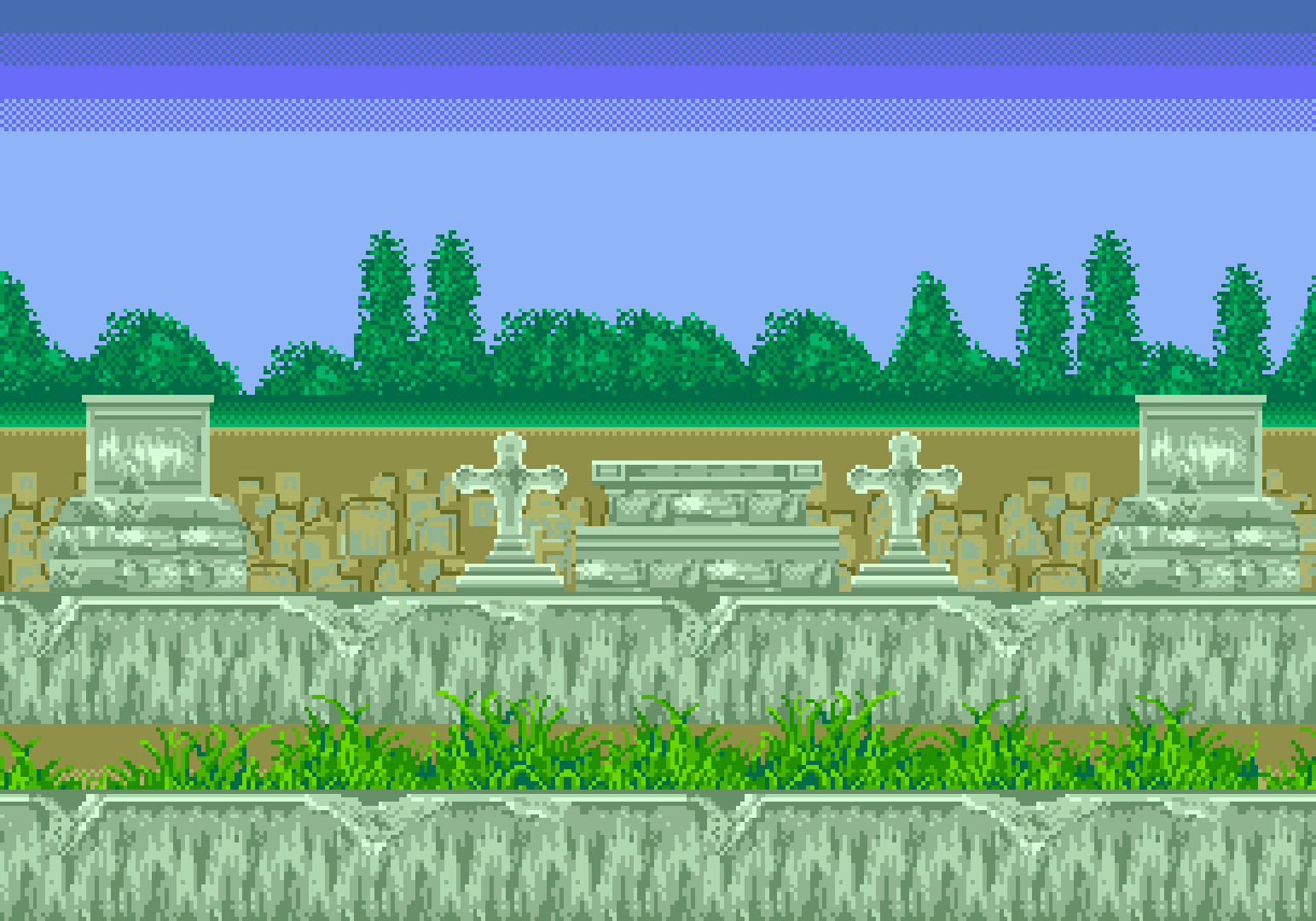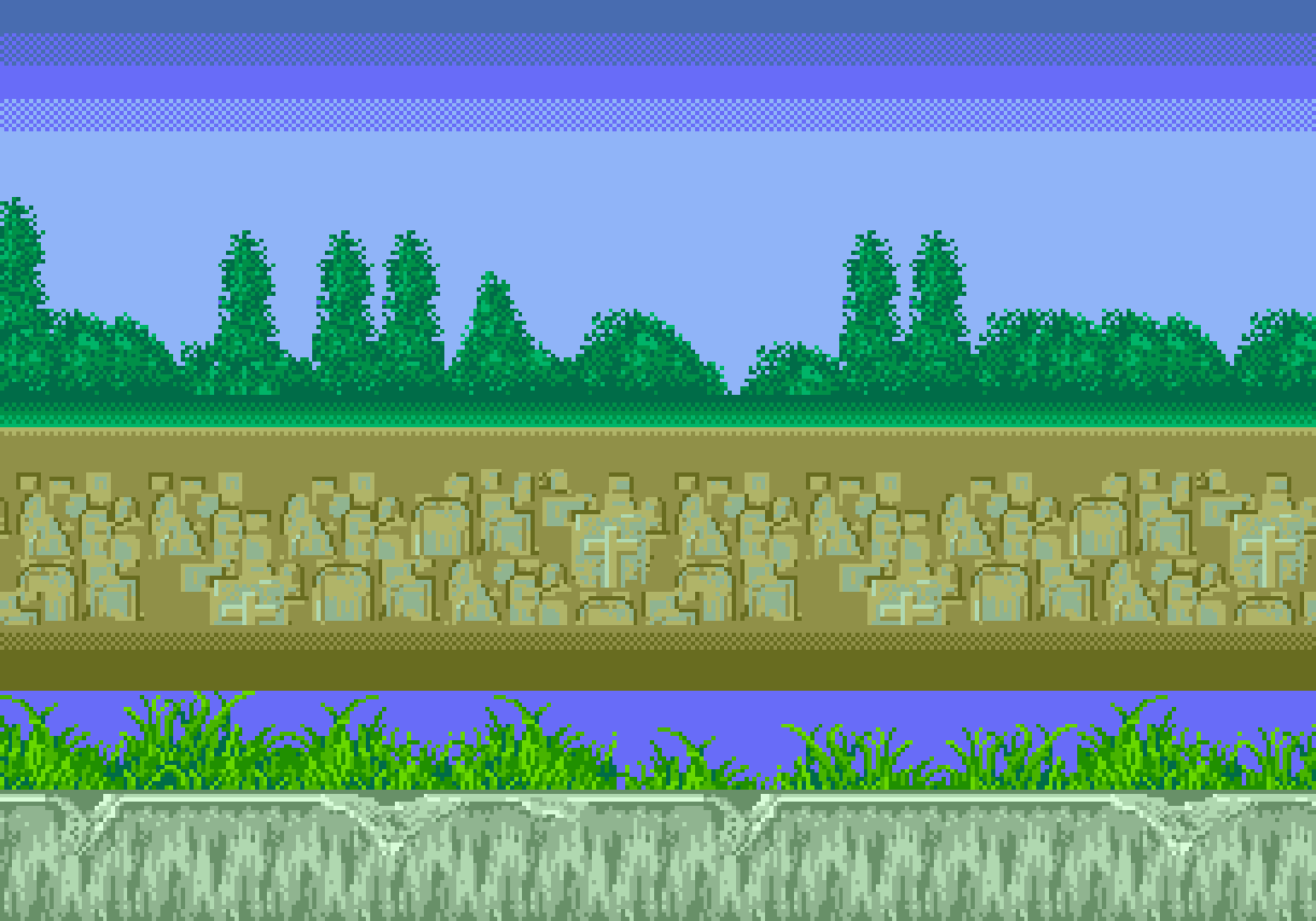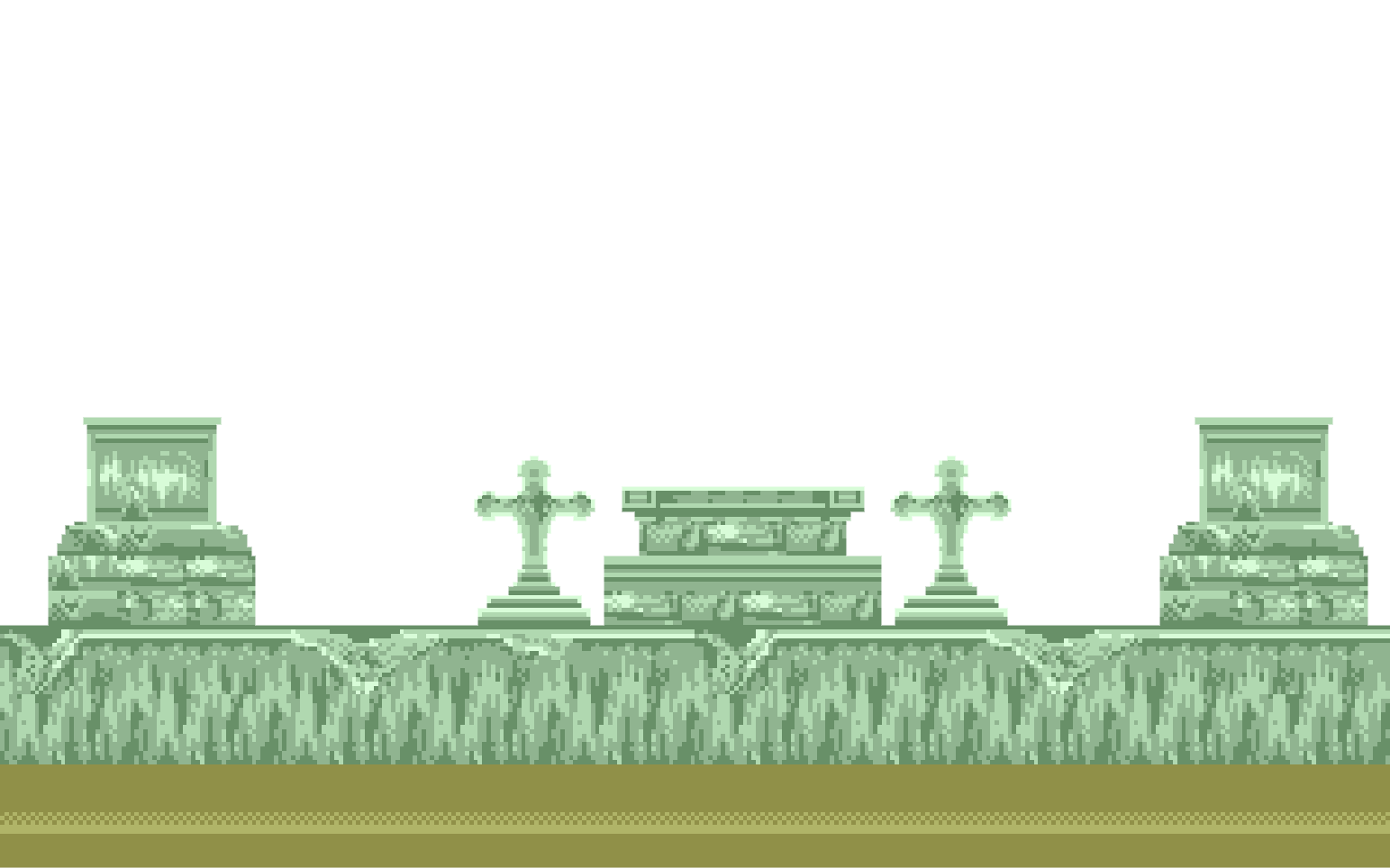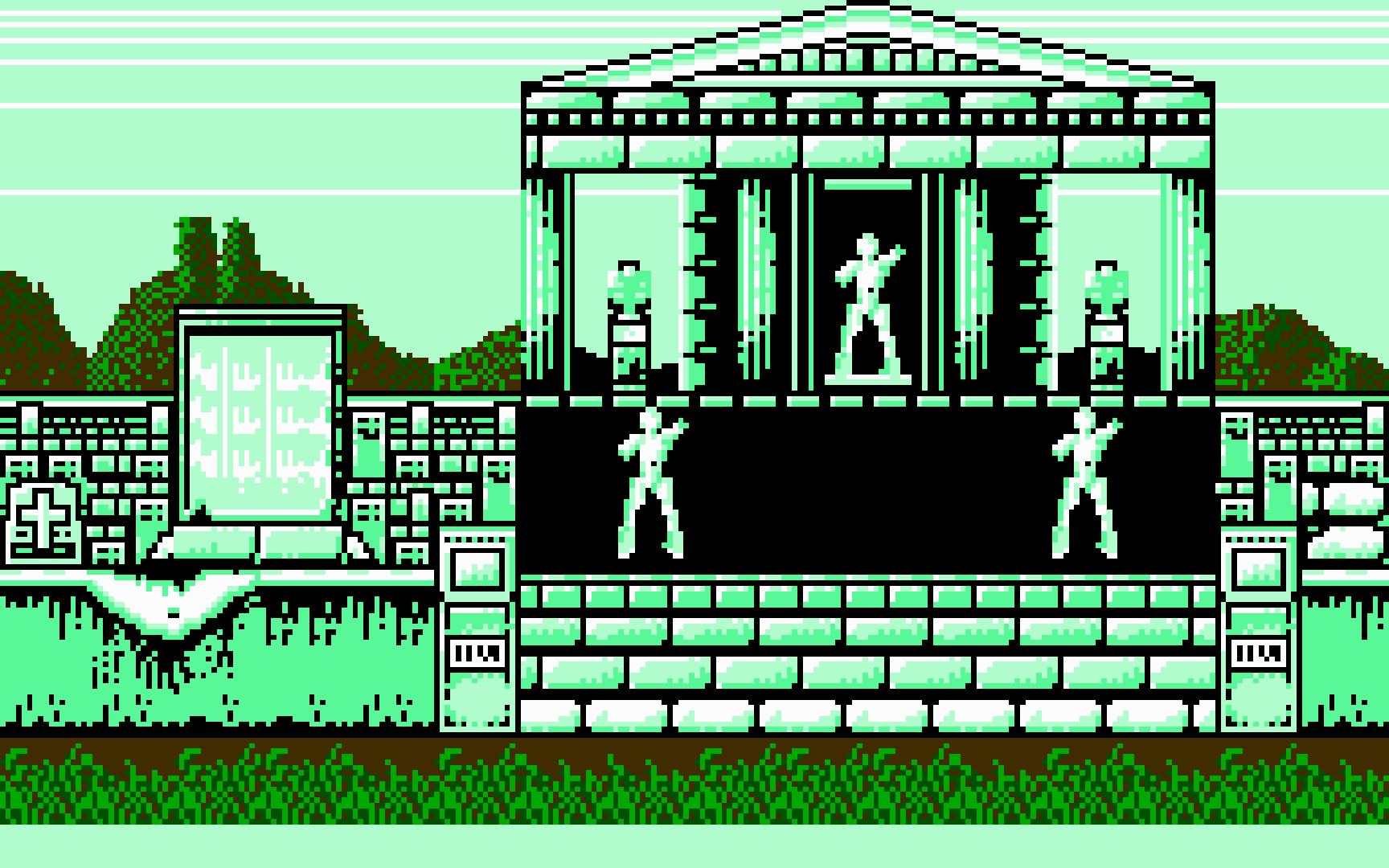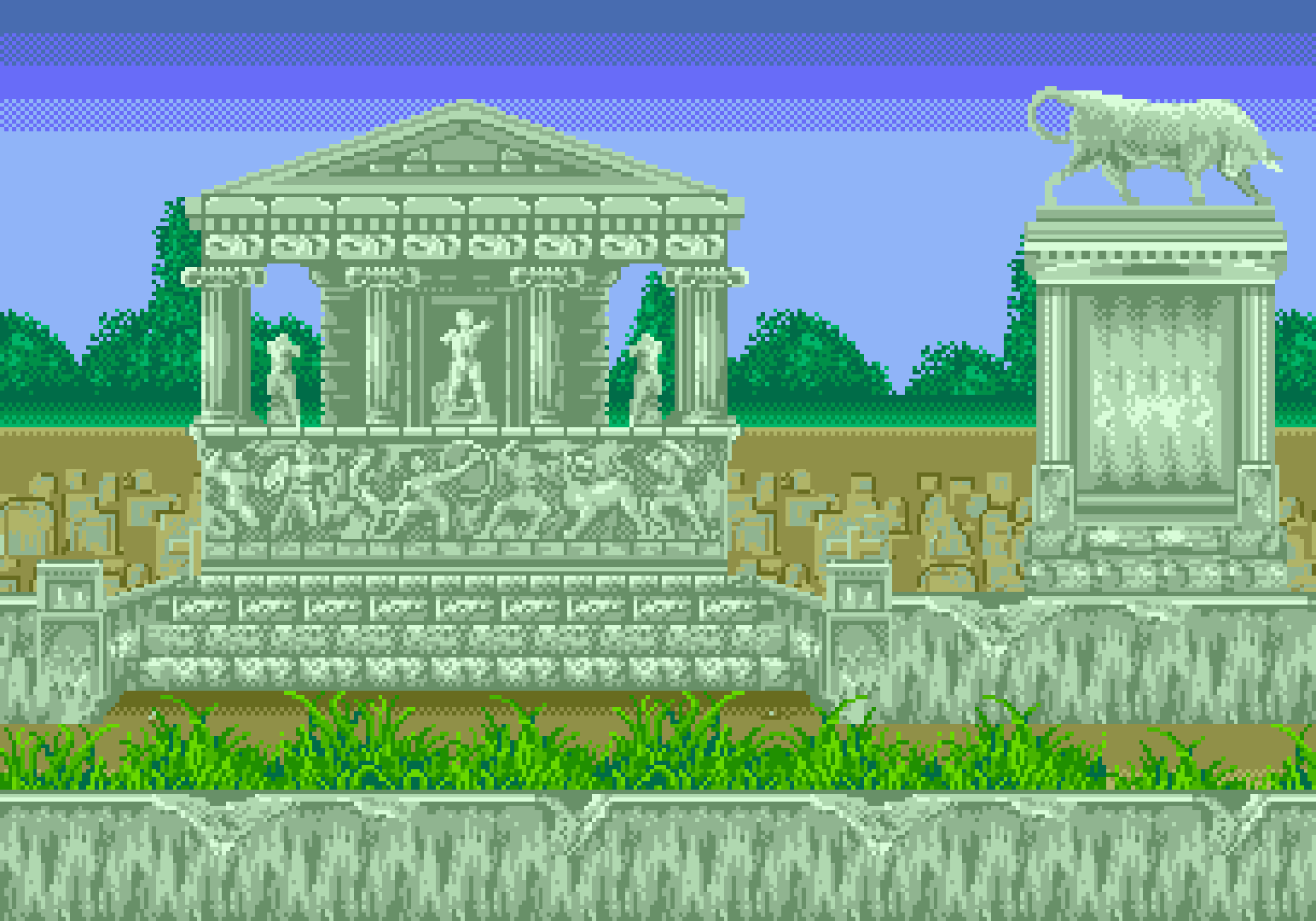
A grand mausoleum and taurine monument at the start of the game (Genesis/Megadrive)





| Altered Beast | |
|---|---|
| Game Information |
| Country of Origin | Japan |
| Original Title | 獣王記 (Jūōki) | Translated Title | Beast King's Chronicle |
| Development Information | |
| Developer | Sega |
| Director | Makoto Uchida |
| Designer | Akihiko Nagata |
| Artist | Rieko Kodama |
| Release Information | |
| Platforms |
|
GAME INFO: Altered Beast is a side-scrolling platformer featuring plater characters who must transform from humans into anthopomorphic animals to complete each stage. Slaying white wolves will release floating orbs that, when collected, increase the player's musculature until they become hybridized beasts including wolves, dragons, bears, and tigers. The game was included with Sega Genesis/Master System as a launch title until it was replaced by Sonic the Hedgehog in 1991, making it one of the most common games for the console.
SETTING: The events occur in a fantasy version of Ancient Greece, with very loose references to Classical aesthetics and mythology. At the very beginning of the game, the Greek god Zeus commands players to "rise from your grave" and rescue his daughter Athena from a demonic underworld figure named Neff. Each player then bursts from what appears to be a marble slab engraved with a broken female figure vaguely resembling the Nike of Samothrace. The first stage is an expansive cemetery from which numerous animate corpses, ogres, and winged devils assail the players. Subsequent stages include a cavernous swamp, a subterannean tunnel, a chthonic fortress, and an underworld hellscape. Upon completing the game, the ordeal is revealed as a stage show, with actors emerging from monster costumes sharing a beer in apparent toast to the player.
FUNERARY IMAGERY: All of the funerary imagery is found in the very first stage, including an enormous mausoleum before which the players are resurrected by Zeus. Other forms of funerary architecture appear in the immediate background, such as tall monuments topped with the statue of a bull, headstones, crosses, and a stone sarcophagus. In the distance, an unending field of headstones and crosses scrolls along with the player, and foliage resembling yew trees encircles the entire arena.
ANALYSIS: Altered Beast is a unique example of Western European funerary imagery appearing in Japanese game design in that the designs themselves rely upon the way post-modern cemeteries look. In other words, the cemetery closer resembles modern Greece than it does Ancient Greece, which lacked the upright headstones and certainly the crosses that are familiar to a modern audience. On one hand, historical accuracy does not matter in this case because Altered Beast makes no attempt to place itself in a specific historical era. In fact, the entirety of it is artificial by design, and is conceptually a theatrical production rather than an actual adventure. The decision to incorporate funerary aesthetics that would be familiar to a modern, Western audience suggests the intention to better appeal to those consumers. It is also worth noting that the image of the sarcophagus is accurately rendered in the arcade version and its Sega Genesis/Megadrive port, but appears as a vague stone structure in other ports. This could be due to technological restrictions associated with each platform, but it could also imply an unfamiliarity with stone sarcophagi on the part of the designers in charge of each port. This would be fitting with Japanese funerary architecture, which lacks the free-standing sarcophagi that are commonly found in Western Europe throughout the Middle Ages and the Renaissance. Regardless, Altered Beast presents one of the earliest instances of a dedicated graveyard level in video games, and its ubiquity in home consoles and the arcade make it readily identifiable and especially memorable through its audible voice-clip "rise from your grave."